Seeing your name or roll number in a sarkari exam result is one of the most satisfying moments of a government job aspirant’s life. Years of preparation, sacrifices, and missed sleep — they all seem worth it in that one moment.
But here is the truth most aspirants don’t talk about: clearing the written exam is not the finish line. It is the starting gun for a completely different race.
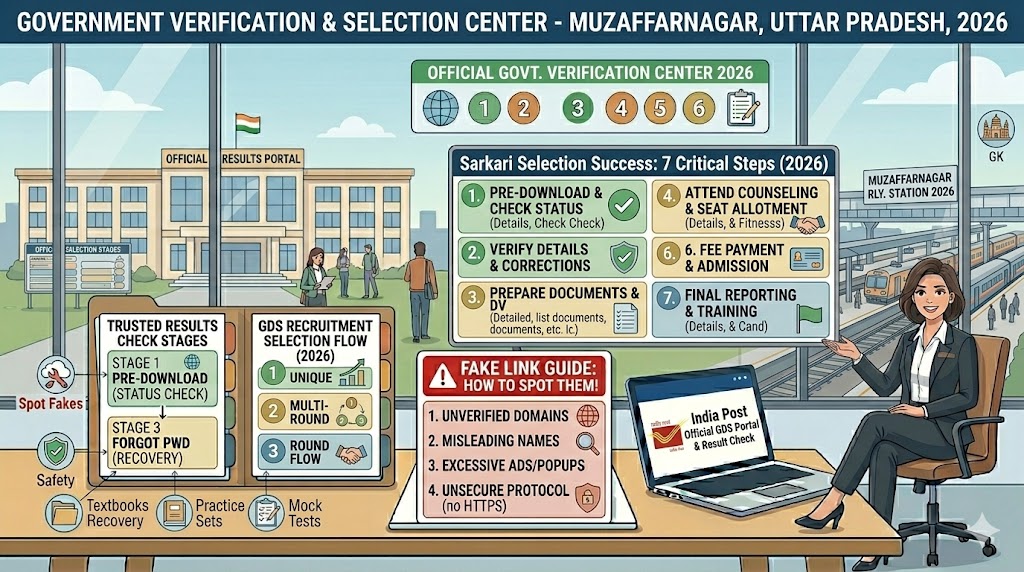
Between the result and your actual joining date, there are multiple stages where candidates lose their seats — not because they weren’t good enough, but because they were unprepared, careless, or simply unaware of what comes next.
This guide gives you a step-by-step roadmap of exactly what to do after your sarkari exam result is out, so your seat stays secure from Day 1 to Day of Joining.
Why Candidates Lose Their Seat After Qualifying
Before the steps, understand the risks. Each year, a significant number of provisionally selected candidates are rejected or dropped during post-result stages due to:
-
Mismatched details in documents (name, DOB, category).
-
Missing or expired caste/EWS/domicile certificates.
-
Failing the medical fitness test due to undisclosed health conditions.
-
Not responding to official communication on time.
-
Carrying unattested copies instead of self-attested originals.
-
Character and antecedent verification failures.
Every one of these is avoidable. That is what the 7 steps below address.
Step 1: Read the Official Result Notification Very Carefully
The moment a result is declared, most candidates search only for their roll number. What they miss is everything else written in the notification PDF.
Every official result notification from SSC, Railways, UPSC, state PSCs, and other boards contains:
-
The next stage of selection (DV, PET, medical, or all three).
-
The timeline for the next stage.
-
A detailed list of documents required.
-
Instructions for candidates belonging to reserved categories.
-
Details about provisional selection — meaning your seat is not guaranteed yet.
What you must do:
-
Download the full result PDF from the official website (not a third-party platform).
-
Read every page, including footnotes and appendices.
-
Note the exact deadline for the next stage.
-
Save the notification on your phone and computer — you will refer to it multiple times.
Missing a deadline mentioned in the official notification is one of the most common and most avoidable reasons for losing a seat.
Step 2: Gather and Verify All Documents Immediately
This is the most important and most time-sensitive step. Document collection should start the same day you confirm your selection — not a week later.
Documents Typically Required for Government Job DV
| Document | What to Check |
|---|---|
| 10th Marksheet & Certificate | Name, DOB, school name must match form |
| 12th Marksheet & Certificate | Board, stream, year should be accurate |
| Graduation/Diploma Certificate | Degree, subject, passing year |
| Aadhaar Card | Current address + linked mobile number |
| PAN Card | Name spelling must match Aadhaar |
| Voter ID / Passport | Valid and not expired |
| Category Certificate (SC/ST/OBC/EWS) | Issued by competent authority; not expired |
| Domicile / Residence Certificate | Issued by SDM/Tehsildar; valid and recent |
| Income Certificate (for EWS) | Must be from the current financial year |
| Caste Certificate (for reserved category) | Central government format (not state format for central jobs) |
| Character Certificate | From Gazetted officer or last institution |
| No Objection Certificate (NOC) | Mandatory if currently in government service |
| Recent Passport-size Photographs | 4–6 copies, same background as application photo |
The Name-Match Rule (Most Common Rejection Reason)
Every single document you carry must have identical spelling of your name, father’s name, and date of birth as your application form.
Even a single letter difference — “Manish” vs “Manesh”, or “Kumar” vs “Kuamr” — can raise a flag at Document Verification (DV). Authorities are not lenient about this.
If you find any mismatch:
-
Apply for correction immediately at the issuing authority.
-
Carry an affidavit from a notary explaining the discrepancy as a backup.
-
Do not assume it will “be explained on the day” — it may not be accepted.
Step 3: Prepare Self-Attested Document Sets in Advance
One practical detail that many candidates overlook: Document Verification centres require multiple sets of self-attested photocopies along with all originals.
The standard requirement across most central government recruitments is:
-
Original documents for verification (they are returned the same day).
-
2 sets of self-attested photocopies of every document.
-
4–6 passport-size photographs (same specification as the original application).
What is self-attestation?
Sign your name and write “Self-Attested” on each photocopy. Do not use any blue ink seal or stamp — that is gazetted attestation, which is different. Some departments also need gazetted officer attestation on the attestation form; read your notification carefully.
Pro Tip: Organise your documents in the exact sequence mentioned in the DV call letter. Authorities process dozens of candidates per day. A neatly organised file leaves a good impression and avoids confusion.
Step 4: Understand and Prepare for the Medical Examination
For most central government jobs — Railways, SSC, Defence, Police, CISF, CRPF, Postal — a medical fitness examination is a mandatory part of the selection process.
The medical exam happens at a government hospital designated by the recruiting board. Your result notification or DV call letter will mention the specific hospital allotted based on your address.
Common Medical Tests Conducted
-
Vision Test: Check for colour blindness, near/far vision acuity. Standards differ — Railway Group D, Police, and Defence jobs have strict vision norms.
-
Hearing Test: Conducted for field-level and operational roles.
-
Blood Pressure & Heart (ECG): Basic cardiovascular check for all central government posts.
-
Chest X-Ray: Checks for TB, respiratory health, lung clarity.
-
Blood Tests: CBC, blood group, sugar, and haemoglobin levels.
-
BMI & Physical Measurements: Height, weight, and body proportions relevant to the post.
-
Dental & ENT (for specific posts like CISF, SSB, defence services).
Important: Temporary Medical Unfit vs Permanent Unfit
If declared temporarily medically unfit (PMT), you may be allowed to submit a review board request within a specific number of days. If declared permanently unfit, the candidature is cancelled.
What you should do before the medical date:
-
Get a general health check-up at a private clinic 2–3 weeks beforehand.
-
If you have borderline BP, sugar, or vision, consult a doctor immediately.
-
Avoid alcohol and excessive junk food in the 2 weeks prior.
-
Carry your medical records, especially if you have any existing condition that might need disclosure.
-
Do not hide any health condition. Suppressing medical history is grounds for future termination after joining.
Step 5: Respond to Every Official Communication Without Delay
Government recruitment boards communicate via:
-
Email (registered during application).
-
SMS on the registered mobile number.
-
Official website notification.
-
Speed post / registered post to your permanent address.
Many candidates lose their seat simply because they:
-
Did not check their registered email regularly.
-
Changed their mobile number after the exam.
-
Moved to a different address without updating.
What you must do right now:
-
Check your exam registration email daily.
-
Make sure your registered mobile number is active and not ported without update.
-
Inform a family member at your permanent address to watch for any speed post or registered letter from the exam board.
-
Keep your DV call letter / appointment letter safe — losing it creates avoidable complications.
If you do not receive any communication within the expected timeframe:
-
Check the official board website for notices.
-
Contact the official helpline number mentioned in the notification.
-
Do not rely on WhatsApp groups or Telegram channels for official updates.
Step 6: Complete Pre-Appointment Formalities (Attestation & Police Verification)
After Document Verification and Medical, most central government posts require pre-appointment formalities before the official offer letter is issued.
These typically include:
-
Attestation Form (Form No. 3 or equivalent): A detailed form asking about your education, residence history, family background, and whether you have ever been arrested or have any criminal record. Fill this with absolute accuracy — any false declaration is a ground for termination even after joining.
-
Character and Antecedent Verification: The department sends your details to local police for background verification. They verify from your permanent address. If there are any pending cases or past records, this is where they surface.
-
Declaration Form: Confirming that you are not already in any government service (or providing NOC if you are), that you have no pending criminal case, and that all information provided is accurate.
For Reserved Category Candidates
-
OBC candidates: Your OBC certificate must be in the central government format and must confirm that your caste does not fall in the creamy layer (income limit in 2026 is ₹8 lakh per annum).
-
EWS candidates: Your EWS certificate must be from the current financial year (2025-26). An older certificate is typically not accepted.
-
SC/ST candidates: Certificate must be from the competent district authority and mention the constitutional schedule.
Step 7: Prepare for Joining Day and the Training Period
After all the above stages clear, you will receive the official Appointment/Joining Letter from the department — either by speed post or email.
When You Receive the Joining Letter
-
Read every line, especially the date of joining, reporting location, and what to bring.
-
Reply or report on exactly the mentioned date — not a day late without written prior permission.
-
Missing the joining date without informing can result in your candidature being cancelled and the offer going to the next candidate in the merit list.
Documents to Carry on Day 1
-
Original joining/appointment letter.
-
All original documents (same set from DV).
-
Two sets of self-attested photocopies.
-
Passport-size photographs (4–8 copies).
-
Bank account details for salary account (usually a specified bank designated by the department).
-
Medical fitness certificate issued during the examination stage.
Mandatory Foundational Training
Most central government posts (especially SSC CGL, SSC CHSL, Railways, and Postal positions) require a Mandatory Foundational Training (MFT) before you assume your official duties. This is generally 4–8 weeks long and residential at the designated training institute.
-
Attendance is compulsory — unjustified absence can delay confirmation.
-
Your probation period begins from the date of joining, not from the date of training completion.
-
Use this period to understand your service rules, because ignorance is not an excuse later.
Common Mistakes That Cost Candidates Their Seat (Quick Reference)
-
Assuming provisional selection = final selection.
-
Not reading the result notification fully.
-
Carrying photocopies without self-attestation.
-
OBC certificate in state format instead of central government format.
-
EWS certificate of previous financial year.
-
Hiding a medical condition that gets discovered at the health exam.
-
Not keeping the registered email / phone active.
-
Missing the DV or medical date without written prior intimation.
FAQs
Q. How long does document verification take?
It depends on the exam and the number of candidates, but DV typically takes 1–3 days per candidate. The complete process for a large batch may run over 2–4 weeks.
Q. Can I appear for DV without the original documents?
No. Originals are mandatory for cross-verification. Attending DV without originals will lead to disqualification.
Q. What happens if I fail the medical exam?
If temporarily unfit, you can request a review board. If permanently unfit, your candidature is cancelled and the seat moves to the next merit list candidate.
Q. Can I get a date extension for document verification?
In exceptional circumstances (medical emergency, natural disaster), boards may grant extensions. You must write formally to the board in advance — verbal requests or WhatsApp messages are not accepted.
Q. If I’m already in a government job, do I need an NOC?
Yes. A No Objection Certificate from your current employer is mandatory. Without it, your appointment in the new department will be held or cancelled.
Q. How far back does police verification go?
Police verification covers your permanent address history and typically checks criminal records, pending court cases, and associations. The period covered varies by state and department, but 5–10 years is standard.
Clearing the exam earns you the opportunity. These 7 steps are what let you keep it. Stay alert, stay organised, and treat every stage after the result with the same seriousness you gave to the exam itself.